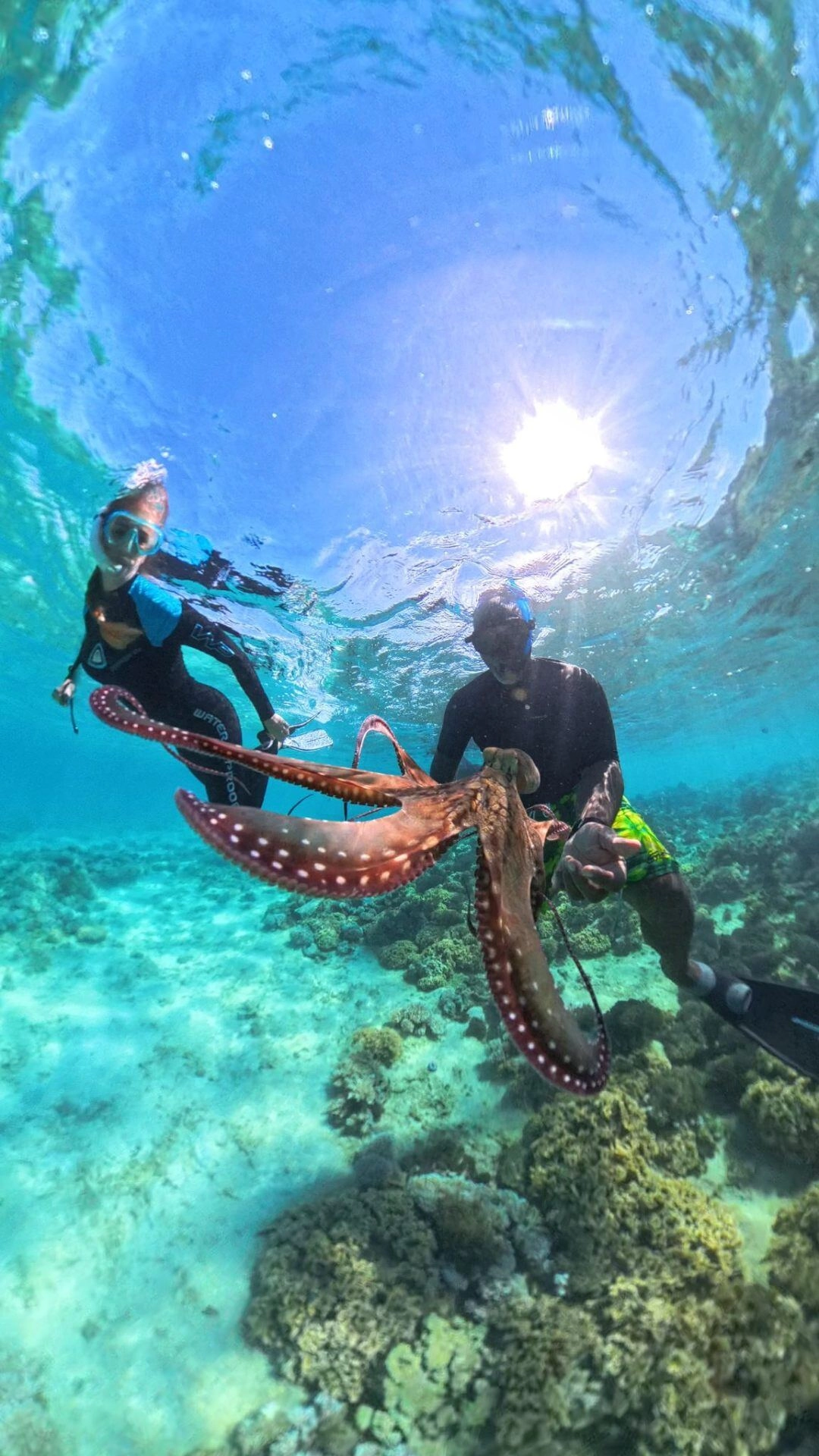
"When to visit Mauritius?" This is the first question almost all of our customers ask before booking a boat excursion. The good news: the island can be visited all year round, and each season has its advantages. Here are our practical benchmarks from skippers based in Mahébourg to help you choose.
Mauritian climate in two seasons
Mauritius experiences two main seasons: the austral summer (November to April), hot and humid, with temperatures from 25 to 33 °C and water at 27-29 °C; the austral winter (May to October), drier and windier, with temperatures from 18 to 25 °C and water at 23-25 °C.
The southeast, where we operate, is slightly windier than the northwest coast. This is what makes the Mahébourg lagoon so clean and preserved — but it also influences sailing conditions.
The best time for snorkeling and dolphins
For snorkeling, visibility is generally at its best from October to May: warmer water, weaker trade winds, calmer lagoon in the morning. Dolphins are present all year round in Tamarin Bay and Pointe aux Piments, but early morning outings (departing at 6 am) remain more stable from October to April.
For big game fishing, the high season runs from October to April (marlin, tuna, mahi-mahi). For lagoon fishing, it's possible all year round.
Month by month: what you need to know
January-February: Austral summer, very warm water, idyllic lagoon but it's cyclone season. We adapt outings to the day's weather.
March-April: Our favorite period. Pleasant warmth, trade winds dying down, translucent water, few people.
May-June: Interseason. Mild temperatures, sunny days, perfect for families.
July-August: High tourist season, more wind. Outings are often scheduled for the afternoon when the wind dies down.
September-October: Austral spring, water warming up, dolphins returning to the surface. Excellent conditions/price ratio.
November-December: Early summer, magnificent lagoon before the Christmas high season.
What about cyclones?
The cyclone season officially runs from November to April, with a peak in January-February. In practice, the island is rarely directly affected and our trips are rescheduled free of charge in case of an alert. We still recommend taking out travel insurance that covers climatic hazards.
In summary: when to book your trip?
If you're looking for the perfect combo of sun + calm lagoon + snorkeling visibility, aim for March to May or September to November. For European summer school holidays (July-August), the island remains very pleasant — we simply adapt the outing times to the wind.